by SEvans
February 16, 2024
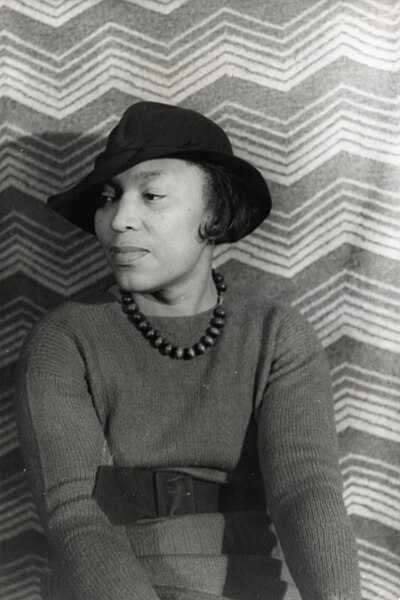
My People, My People is a featured segment in which certain aspects of the African American and his/her culture will be highlighted. Some of these highlights are sure to give you a chuckle, while others may cause you to roll your eyes in annoyance. Either way the examples will have you saying–as the late great Zora Neal Hurston labeled– “My People, My People”!
So, what is meant by “My People, My People”?
“My People, My People!”. . .Or similar expression. Whether said in annoyance or frustration, in disappointment or despair, or even laughter, flashing teeth, shaking one’s head while giving a friend ‘dap’ or slapping one’s knee in sheer humor of it all. . .those words bear the sentiments of Black ‘skin folk’ blushing over the actions of their Black ‘kin folk.’
Here’s a common scenario illustrating its meaning:
There’s a long line of cars wrapped around a school—from the front to the shoulder-lane on the street. Parents have been waiting a long time, as usual, to pick up their little ones after the school bell rings. Then pulls up a vehicle. Not one of the usual to join the line; perhaps a relative standing in for a mom. Will he take his place in line, and wait unobtrusively like the rest? No, of course not. Being Black and all, you know this newcomer just must make his presence known.
As if the car’s neon, iridescent green paint and oversized wheels aren’t ‘loud’ enough, he just has to turn up the volume and base to his Atlanta Trap music so not only does his windows rattle, but so do the windows of the vehicles in front and behind. To top it off, of course, the dark chocolate, under middle aged man just has to find a reason to open the door and get out of the vehicle—making the sound of the music’s base even louder and causing his car to rattle even more. He just has to go to his trunk and get out clearly nothing—just so everybody can see who’s driving that car with the “booming system.”
You can see some Black folks drive by, looking, shaking their heads. Others nodding and jamming to the beat as they go by. For the people in the lane, they just sit there, cuttin’ their eyes in annoyance. . .my people, my people!
Perhaps you have been there: in a space where one of our own is ‘cutting the fool’, making a scene or acting like that word we dare not say. If you’re quite young, you just may not understand. But those approaching middle age and above during the time of this writing will surely know what is meant.
To understand this collective mindset, we look to none better at documenting our people than the late great writer, Ms. Zora Neal Hurston in her account of “My People, My People,”*as she puts it. . .
Who are My People? I would say all those hosts spoken of as Negroes, Colored folks, Aunt Hagar’s chillum, the brother in black, race men and women, and My People. They range in color from Walter White, white through high yaller. ..smooth black, dusty black, rusty black, coal black, I am black and damn black. My people there in the south of the world, the east of the world, in the west and even some few in the north. Still and all, you can’t just point out my people by skin color (1, p774).
. . .
So now you say “Well, if you can’t tell who My People are by skin color, how are you going to know?” There’s more ways than one of telling, and I’m going to point them out right now (1, p775).
Here forth, Ms. Hurston proceeds with telling the reader ways to identify “My People”—our people. Even though written some 80 years ago, the descriptions are not only interesting, they are also rather accurate. The point of which is not to say these are only our people, rather these are our people through and through, and also too! Class also plays a role, but some things go beyond that. Follow with me in this series. See if you can agree or even see why we sometimes say: My People, My People and know just what we’re talking about.
Each segment has the words of the late Hurston, followed by my commentary.
Number 1:
(If) you see a congregation of more than two dark complected people. If they can’t agree on a single, solitary thing, then you can go off satisfied. Those are My People. . .(1, p775).
. . .
There is a folk-tale of the white man who hired five men to take hold of a rope to pull up a cement block. They caught hold and gave a yank and the little stone flew way up to the pulley the first time. The men looked at one ‘nother in surprise and so one of them said to the bossman: “Boss, how come you hire all of us to pull up that one piece of rock? One man could do that by hisself.” “Yeah, I know it.” The bossman told him, “but I just wanted to see five Negroes pulling together once.”
. . .
. . .It’s just against nature for us to agree with each other. We not only refuse to agree, we’ll get mad and fight about it. But only (with) each other! Anybody else can cool us off. . .(1, p776).
Analysis of Zora’s Description of “My People”
Number 1:
“If they can’t agree on a single, solitary thing, then you can go off satisfied. Those are My People. . .”
Number one highlights the issue of Black unity.
Black people, African Americans have been talking about this for generations—literally! Can we all pull together, work together, unify?
Today, more than ever, this seems to be an impossibility. With every generation, it seems we come up with new ways to divide ourselves—by religious/spiritual affiliations, money, class, skin color, etc.
There is the corporate African American; the ghetto-fab Black; the down home Negro; the pro-Black Black; the Bourgeois Afro-American; the half, “I ain’t really Black” Black; and the half, “I’m really Black” Black. There’s the so-nuff Black that only see White, Black. There’s also the Sambo, the Uncle Tom, the Mammy and the “wench”. There’s the “I’m the Asiatic and god” Black; there’s the Hebrew “we ain’t no African” Black. There is also the “Indigenous American, we ain’t African either” Black folk. Then there’s the “we ALL African,” Black, etcetera, etcetera. If there is something of a niche that will distinguish or rather separate our people from among our people, you can best believe we will grab hold and claim it.
But maybe, just maybe we’ve been going about this whole unity thing all wrong.
Since, at this point it can be logically concluded that the African American people are not some monolithic group, and we are not going to unite under one religion or one splinter group ideal, then perhaps we not stress that as our goal. Instead, perhaps alignment as an African American people with values that focus on the good of the African American people operating as our goal—just as others like the Latinos, the Indians, the Jews, etc. operate. They look out for one another and support one another, regardless of the other beliefs and practices that they may have. We can do this too.
In future blogs, we will continue to highlight My People. As this is a site dealing with African American Cultural Literacy, these are a few of the many elements that make up cultural literacy of the African American.
So what say you?
Share your comments below.
__________________________________________________________
*note: “My People, My People” is one of the many essays written by folklorist and author, Zora Neal Hurston. It was found in an anthology titled, Hurston: Folklore, Memoirs, & Other Writings.
 African American Cultural Literacy
Leave a comment